The energy we use to heat our homes accounts for 22% of UK carbon emissions with our nation relying heavily on natural gas for heating. Maximising our homes’ ability to hold on to heat will help us limit energy consumption and save us money in the long run.


Energy
How does energy consumption affect our climate?
The burning of fossil fuels, such as the natural gas used in our boilers, is the lead contributor to climate change. When these fuels are burned, they release greenhouse gases into the atmosphere, reducing our planet’s ability to regulate temperature as heat from the sun becomes trapped. The mechanics behind this greenhouse effect are explored in great detail in our What is Climate Change? page.
The evolution of energy
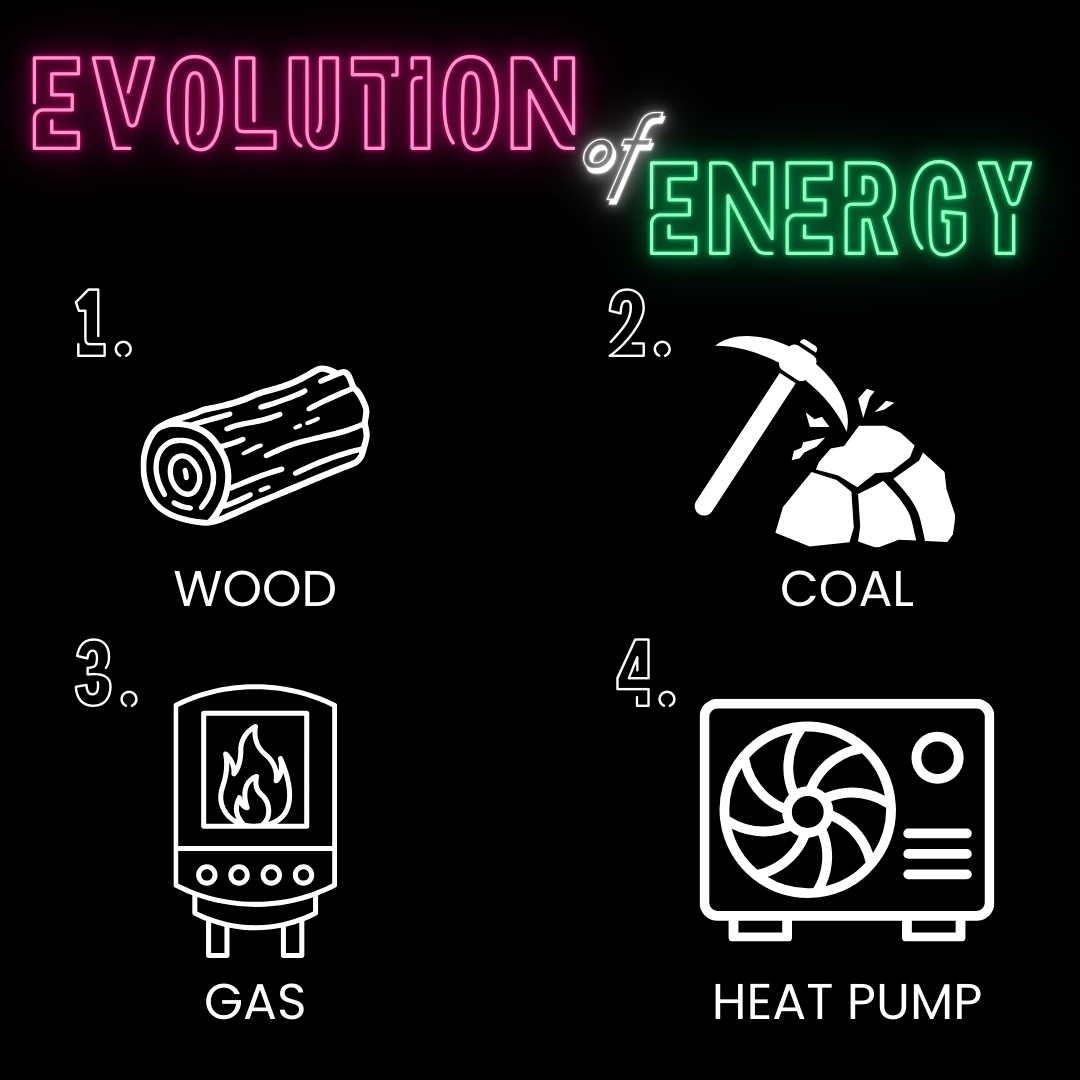
The way that we use energy in the UK has changed dramatically over the past century and is set to continue evolving as we become more conscious about our consumption. Prior to the industrial revolution, wood was the most common fuel source with coal only being widely used in large cities such as London. When the industrial revolution spread, coal became the main fuel source for the nation until around the 1950s and 60s when concerns around air quality arose, especially after the Great Smog of London in 1952.
Central heating was first used in middle class homes in the early to mid 1900s but remained a luxury for a long time. The 1970s saw a boom in central heating with a national conversion supported by legislation and investment by the government. By 1977, half of homes in the UK has gas central heating. In the 2021 census, households in Taunton and Wellington reported the following:
-
-
- 70% used mains gas central heating, compared with a national average of 73%
- 10% used two or more types of central heating, compared to 9% nationally
- 10% used electric central heating, compared with 8% nationally
- 6% used oil central heating, compared with 5% nationally
- 1% used tank or bottled gas to heat their home, same as the national average
- 1% had no central heating, compared with 2% nationally
- 2% used other heat sources (e.g. renewable energy, coal, wood, biomass) compared to 3% nationally
-
The above statistics tell us that we are mostly on par with the national average, though we are moving faster towards electric central heating. This is good as when linked with renewable energy sources, this heating can be carbon neutral.
What does the future hold?
Gas boilers are now being phased out in favour of more environmentally-sound systems. Heat pumps are set to be the leading heating system of the future, with Government backing through the Boiler Upgrade Scheme (BUS) offering grants to help homeowners replace their fossil fuel systems. Heat pumps use electricity for efficient heating of the home and can even be used to cool homes as well. When the electricity used to power them comes from a renewable source such as solar or wind power, these systems are an environmentally friendly way to keep your home temperate.
Other forms of environmentally-friendly heating are also being explored such as burning hydrogen or biomethane. These systems would utilise the existing infrastructure of natural gas boilers but have less impact on the climate. Hydrogen’s only by-products are water nitrogen oxide and biomethane comes from renewable sources, though it does produce carbon dioxide.
How to fix heat loss and reduce your energy bills
UK homes are the least efficient at retaining heat in Western Europe, with up to a third of heat generated lost through walls, floors, windows, and roofs. This is largely due to the average age of our homes, with up to 37% being build pre-war and not having modern insulation. Fortunately, there are ways to retrofit homes of all ages to allow us to live more comfortably and reduce our energy loss.
Funding Available
As mentioned above, the UK Government is keen to get more homes to switch from gas boilers to heat pumps and you may be eligible for a grant up to £7,500. This Boiler Upgrade Scheme is available to help cover the cost of installing a heat pump and your installer can apply on your behalf on the Ofgem website. To qualify for this grant, you will need to meet the following criteria:
-
-
- You own the property – whether it’s your main home or a second property
- You’re replacing an existing fossil fuel heating system – such as gas, oil, electric, or LPG
- Your property has a valid energy performance certificate (EPC)
- The property is located in England and Wales.
-
You can find out more about the scheme here.
There are also Somerset Council-backed loans available for energy efficiency home improvement works via Lendology. These loans are fixed rate and can help with works such as insulation, windows, solar panels, and air source pumps. Learn more about these loans and access the loan calculator here.
Energy Saving Tips
There are ways that energy can be saved in every room of the home if we are willing to change our habits and be more conscious in our choices. The Centre for Sustainable Energy has compiled a list of 101 Energy Saving Tips, broken down room by room to help you save energy. They also have some very informative Energy Fact Sheets available for download on their website.
Insulation
From the windows to the walls, heat can be lost from our homes in a variety of ways. According to the Energy Saving Trust, a typical uninsulated home can lose 25% of its heat through the roof, 33% through the walls, 25-30% through doors/windows, and up to 20% through the floor. Remember that if you are a Wellington resident registered at Wellington Library, you can borrow a thermal imaging camera to see where you are losing heat in your home. Click here to learn more about these cameras and how to borrow one.
Below we will explore how you can better insulate each of these areas and give practical tips for a range of property types and budgets.

Roof
Insulating your roof is hands-down the best way to retain heat in your home. As warm air is less dense than cool air, it rises and is often lost through poorly insulated roofs. If you live in an older building the insulation you have may not be up to modern recommendations. Current building regulations recommend having a minimum of 270mm of insulation for sloped roofs. There are different recommendations in place and materials needed for flat roofs, roof spaces with damp or structural issues, or lofts that are used as living spaces.
Cost: The costs of insulating your roof will vary depending on materials used, the size of the space, and how much insulation you have to begin with. An example cost provided by the Energy Saving Trust states that using a professional to upgrade mineral wool insulation from 120mm to 270mm will cost you around £750.
Savings: The above upgrade would likely save a semi-detached or mid-terrace house about £20 annually in energy bills. However, if you are putting insulation in a roof for the first time you would see a much steeper saving of over £200.
Materials: Roof insulation comes in many types, all with their own benefits and drawbacks. The most commonly used materials in the UK are fibreglass and mineral wool, with other options including foam boards and natural fibres.
Labour: It is possible for you to DIY roof insulation as long as the space is structurally sound and damp free. Simple loft spaces can be done yourself but any spaces with ongoing issues (damp, structural defects), ventilation points, tricky cuts, or windows should be looked at by a professional to ensure quality and longevity.
Considerations: As well as considering things such as damp, ventilation, and storage space, you should evaluate whether any major work is due on your roof in the near future. If a new roof is on the horizon it could be best to hold fire on insulation until this work is complete. For example, when renovating a roof you may choose to add a loft window or two. These can make loft spaces much more pleasant to access and when opened in summer are a great way to let excess heat escape.
Walls
There are two main types of walls – solid and cavity. Homes build pre-1930 are usually solid walls and post 1930s homes are more likely to be cavity walls. It is important you find out what wall type you have before diving in to looking at insulation. This information would be on the surveyor’s structural report when you bought your home. Solid walls may be made of brick, stone, or earth. Cavity walls are often made up of two masonry walls with a gap in between. They can also be present in steel or timber framed structures or prefabricated concrete. Below we will break down the information for both solid and cavity walls.
Solid Walls
Cost: If you have a typical three bedroom semi-detached house, it could cost you a total of £30,000 to insulate the interior (£12k) and exterior (£18k) of your walls. To reduce costs, consider undertaking this work at the same time as other renovation projects such as roof work or repairing gutters where you may already be paying for scaffolding.
Savings: The above upgrade would save a semi-detatched house £330 in annual heating costs and would save 900kg or CO2 emissions every year.
Materials: Insulating solid walls can be done on the exterior by fitting insulation material and covering with a render or cladding. Interior walls can be insulated with rigid boards, plaster, or by adding stud walls on the interior – essentially creating a cavity to be filled with insulation.
Labour: Insulating solid walls should be undertaken by professionals. Due to how porous brick walls are it is crucial that any rendering fitted on building exteriors is either breathable or airtight, otherwise damp will get trapped and seep into living spaces. For this reason, we recommend trusting the pros on this one! You can however do some DIY preparation to walls to minimise the professional costs.
Considerations: Solid wall insulation is a big and costly project. Works to the exterior of the building may require planning permission (especially on listed buildings or buildings in the conservation area). There may also be additional costs that need consideration, such as extending roofs or relocating utility meter boxes. Interior insulation can slightly reduce the size of a room and the works can be disruptive while underway. Sometimes interior insulation is not able to bear as much weight as a regular solid wall, so affixing heavy items to the wall can be a challenge as special fixings may be required.
Cavity Walls
Cost: The cost to install cavity wall insulation in an average semi-detached house is a big investment and would cost about £2,700.
Savings: The above upgrade would save you £240 annually in energy bills, meaning that this is a long-term investment as it would take several years to make back the cost of installation in savings.
Materials: The most common materials for this insulation are mineral wool, natural fibres, or polystyrene beads.
Labour: This is a job that must be undertaken by a professional as they will need to complete a survey of the building before beginning. The way this insulation is installed usually means that the builder will drill holes in the external wall and inject insulation material from the outside. The holes are then sealed with cement.
Considerations: The cavity must be at least 50mm wide and clear of rubble. Older cavity walls may be too thin for insulation. If your home is exposed to driving rain or flooding it may not be suitable for standard insulation – this is because it could lead to damp problems in the home. Always discuss these issues with your builder and be honest.

Windows
Windows have always been a weak point in a homes insulation – this is the main reason why so many older buildings have fewer or smaller windows. For much of our nation’s history, windows had single-glazed panes that transferred heat to the outside and suffered from condensation on the inside. Double glazing took off in the UK in the 1980’s and has been the standard ever since. It is made up of two panes of glass with a small gap that is filled with an inert gas, like argon, that is more insulating than air. This barrier reduces heat loss and improve the insulation of the window. Triple glazing is now coming onto the scene and offers even greater insulation than double glazing.
Cost: The cost of refitting all your windows with double or even triple glazing will depend on the number of windows and materials used. The Energy Saving Trust states that the cost of refitting A-rated windows for a semi-detached house will cost around £12,000. A way to spread this cost would be to replace windows in stages, maybe focussing on the most degraded ones first or replacing the windows in rooms that are well-used. A low-cost way to reduce heat loss through older windows would be hanging heavy curtains and keeping them closed.
Savings: The above upgrade would save a semi-detatched house around £140 per year and reduce CO2 emissions by 380kg annually.
Materials: PVC window frames are the cheapest and most popular choice, though hardwood options are available and are often more suitable for historic buildings.
Labour: While you can technically install your own windows if you are handy and have the right tools, this is a job best left to professionals to ensure that all measurements are done precisely and that the installation is up to building regulations. Improper installation could lead to leaks, mould, or damage that could be costly to fix.
Considerations: Listed buildings or buildings in conservation areas will require special planning permission for alterations to windows, especially on the front of a property. They must be a like-for-like reproduction of the historical window and often have to use specific materials. In some rare cases a window itself might be listed, meaning that secondary glazing on the interior would be the best way to insulate the home whilst protecting the historic character of a window.

Floors
When there is little between your home and the cold, cold ground you can lose lots of heat through your floors. There are a number of ways your floors can be insulated and it all depends on what you are starting with. The two main types would be suspended timber (usually in homes built 1850-1950) and solid concrete (usually in homes built 1950-present). We will explore the two main types in detail below:
Suspended Timber
Cost: A typical suspended timber floor insulation job can cost anywhere from £105 per square metre. This can vary depending on the size of the floor. If you want to keep your home warmer in the interim, carpet or area rugs can help reduce drafts and keep heat in.
Savings: The above upgrade would save a semi-detached house around £70 annually.
Materials: Floor insulation can be made of foam blocks, natural fibres, or mineral wool.
Labour: Due to the scope of a project such as this, it is best to employ a professional to insulate your suspended timber floor. If you are replacing a significant portion of the floor it must be done to meet current building regulations and also take into account ventilation and airflow.
Considerations: If you want to maintain the original floorboards of a property you may face additional challenges as older timbers will likely be uneven and have large gaps in between. If you choose to keep the original floorboards we would recommend finding a contractor who specialises in restoring old flooring. Also consider how disruptive this work would be – if the floor takes several days to complete the room may not be accessible until work is complete.
Solid Concrete
Cost: The cost of insulating a concrete floor can be as much as £80 per square metre. This can vary depending on the size of the floor. If you want to keep your home warmer in the interim, carpet or area rugs can help reduce drafts and keep heat in.
Savings: The above upgrade would save a semi-detached house around £70 annually.
Materials: The primary material for solid floor insulation is rigid foam boards.
Labour: If you are a competent DIYer then you may be able to lay your own solid floor insulation. Make sure you do your research and lay down a damp-proof membrane on the existing concrete and use safety gear (gloves, mask) while doing this project.
Considerations: This type of insulation will raise your floor level so new skirting boards will need to be added. This is not recommended for rooms with low ceilings. If your floor has a damp problem this should be resolved before any work commences.