From shopping locally to making your food waste work for you, there is lots that can be done to reduce your carbon footprint via the food you eat. On this page we will share valuable information and tips & tricks tailored specifically for the people of Wellington.

Food
How Does Food Impact Climate Change?
Every aspect of food from its production, to transport, to waste, has an impact on the environment as a whole. It is estimated that up to a third of human-caused greenhouse gas emissions are linked to food. Here are some of the processes that contribute to greenhouse gas emissions:
-
-
- Transport of food, especially over long distances
- Production of food packaging and its subsequent waste
- Management of food waste
- Gases emitted from fertilizers
- Deforestation to make room for agriculture, which decreases the amount of carbon dioxide that can be absorbed from the atmosphere
- Burning of crop residue
- Methane emissions from cattle’s digestive processes
-
Much of the emissions from the above list can be attributed to agriculture and land management, with a smaller portion accounting for food’s travel and packaging.
The chart below showcases the impact of different types of food. This is broken down to show greenhouse gas emissions per kilogram of food product.
What Can You Do?
Changing the way you think about and interact with food can be as easy as you want it to be. It is up to the individual to decide how far they want to go in changing their habits. The good news is that if you don’t want to go full vegan and have a compost heap, you don’t need to! Even small everyday actions can make a difference.
Shop Locally and Seasonally
The food we eat nowadays can be very well-travelled, sometimes coming thousands of miles before it reaches our plate. In some cases we can cut down these “food miles” by simply shopping locally. We are very fortunate in Wellington to have agricultural land surrounding us, meaning that we are able to access food that has travelled a very short distance from farm to table. Alongside our neighbouring towns and villages are home to a variety of great local businesses that supply a range of locally grown and raised food products. Local food is not only better for the environment, it directly supports our local economy.
Although the above is true, you will be hard-pressed to find locally grown strawberries in February, or a locally grown banana… ever. This is where eating seasonally comes in. In the 21st century we have year-round access to all sorts of fruits and vegetables that could only be dreamed of 100 years ago. While this has helped us enjoy a more varied and nutritional diet, it comes at a price. Produce flown in from abroad can have a staggering amount of food miles under its belt, in turn contributing to greenhouse gas emissions. It is for this reason that shopping seasonally can make a big difference when reducing your food’s carbon emissions. After all, it seems silly to buy apples brought in from South Africa during the harvest season here in the UK! While you may not be able to buy some more exotic fruits grown locally, making the change where you can is what matters.
If you aim to eat locally and seasonally you are not only helping the planet, but you will be helping yourself eat a varied and balanced diet all year round. You may find that seasonal food even challenges you to think outside of the box when planning your meals, leading you to discover new favourites!
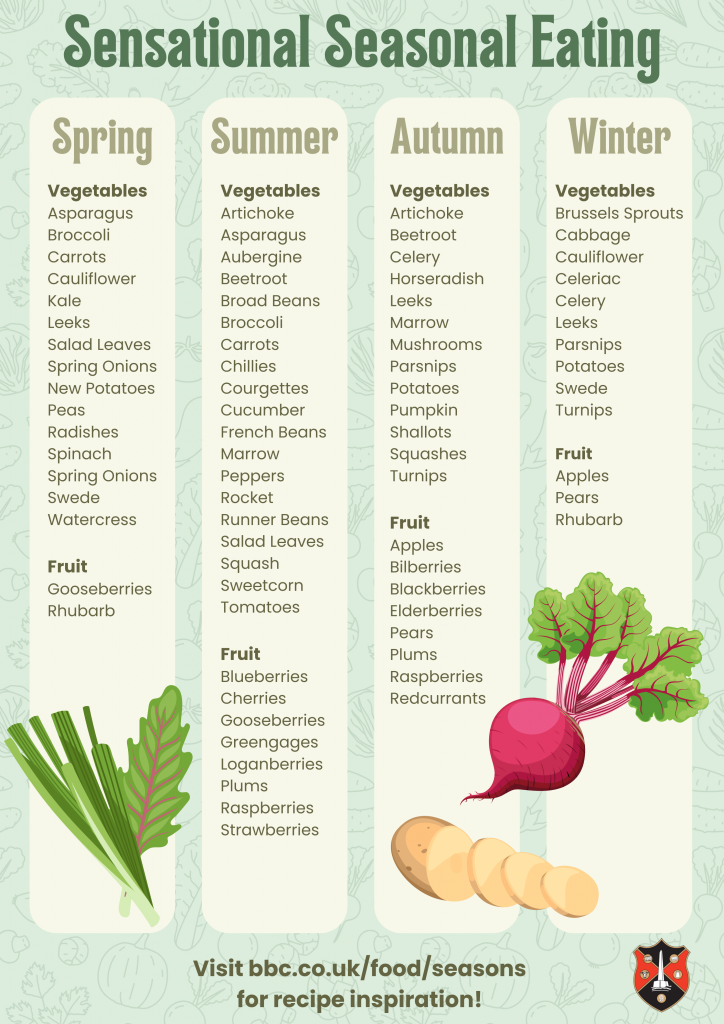
See our graphic to the right to get an idea about which fruits and vegetables are in season throughout the year. This list is not exhaustive so we encourage you to have a look independently to see what else is in seasons throughout the year. Even different meat and fish products have seasons! For any recipe ideas, BBC Food has a great page with recipes grouped into months.
Reduce Your Food Waste
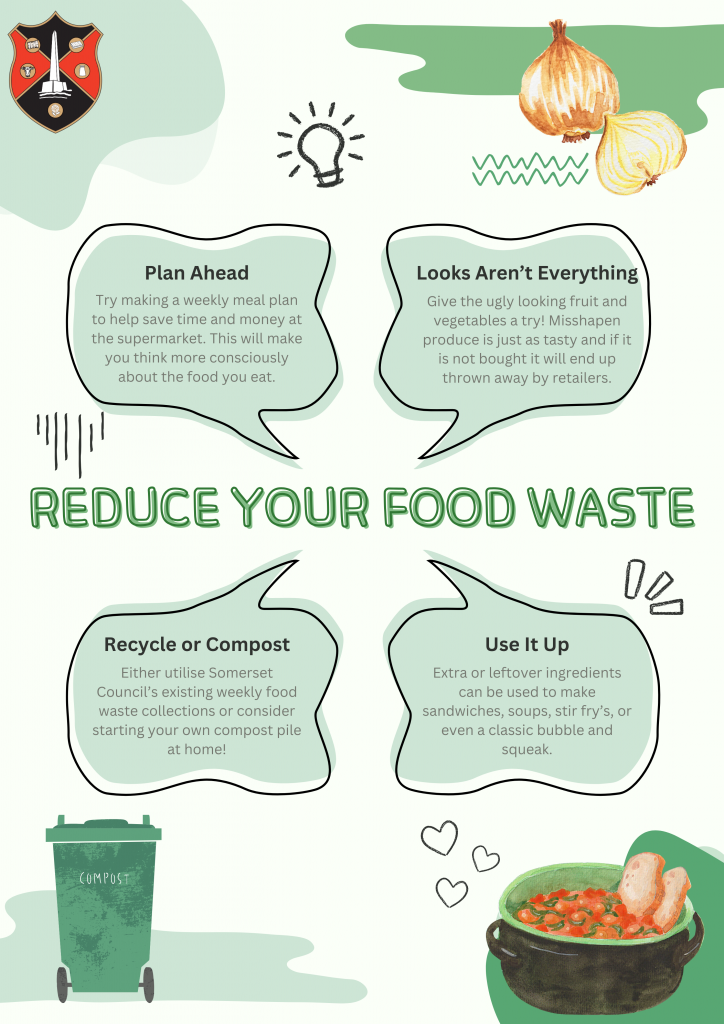
When food is thrown away is is inefficient both for your budget and for the planet. A lot of energy, land, and water goes into the food process and these resources are wasted if the end product is discarded. Changing the way you think about buy, preparing, and disposing of food is the best way to reduce waste.
- Plan Ahead
Making a weekly meal plan is a great way to balance your budget and your diet. This will help you only buy what you need and think more consciously about the food you eat. Try incorporating seasonal recipes into your plans to keep things interesting!
- Use It Up
No matter how hard we try we will still sometimes end up with leftover food. Full meals can usually be frozen to be thawed and eaten at a later date, while individual ingredients can be transformed into sandwiches, soups, stir fry’s or even a classic bubble and squeak.
- Recycle or Compost
Food waste should always be responsibly disposed of and not thrown into landfill with regular refuse. When food ends up in landfill it is starved of air and the anaerobic bacteria that break it down produce methane, a greenhouse gas that is more potent carbon dioxide. In Wellington we are lucky to have weekly recycling collections, including food waste. To see when your collection dates are or to request new containers, please check Somerset Council’s dedicated webpage.
- Looks Aren’t Everything
Imperfect-looking fruits and vegetables are often overlooked on the supermarket shelves but don’t shy away from this misshapen produce! All too often retailers are forced to throw away imperfect produce when in reality there is nothing wrong with it. Usually by the time these fruits and vegetables are prepared you would ever even know they were ugly to begin with.
Start Home Composting
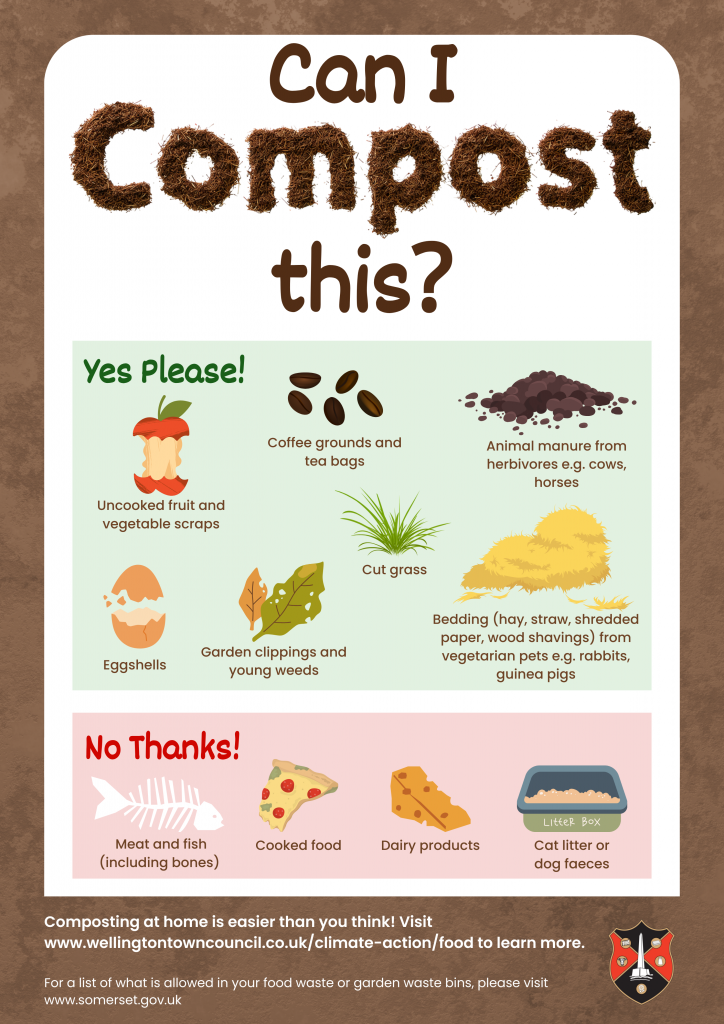
If you are an allotment holder or keen gardener you may well already have a compost pile set up at home to help put garden clippings and food waste to good use fertilising new plants. A compost pile is a great way to make your waste work for you and can be started in a space as small as one cubic meter.
Somerset Council collect food waste weekly and have a bi-weekly paid-for garden waste collection service, but it makes sense for residents to have a compost pile at home if they have the space and use for it. Home made compost adds valuable nutrients, biodiversity, and moisture retention properties to existing planting beds and can help your garden flourish. Composting is also fantastic for promoting biodiversity in your garden as many invertebrates, microorganisms, and fungi contribute to the process and feed on decaying material.
Setting up your own home compost bin is easy and can be started whenever is convenient for you, though it is recommended to start your bin when your garden is producing a lot of suitable material. Your compost setup can be as small or large as you like, but your best chance of success is to use a covered bin that retains warmth, allows drainage, and lets air circulate. Compost bins can be bought from garden centres, DIY shops, and home and garden retailers.
Compost can take between six months and two years to be ready to use, with larger quantities composting more efficiently due to the heat they retain. Mature compost is dark brown and has a texture very similar to soil, it should have a damp woodsy scent.
The Royal Horticultural Society has a great page that explores how to set up a bin, maintaining your compost, and problem solving for common issues. You can visit their page by clicking here.
Eat Healthier Meals
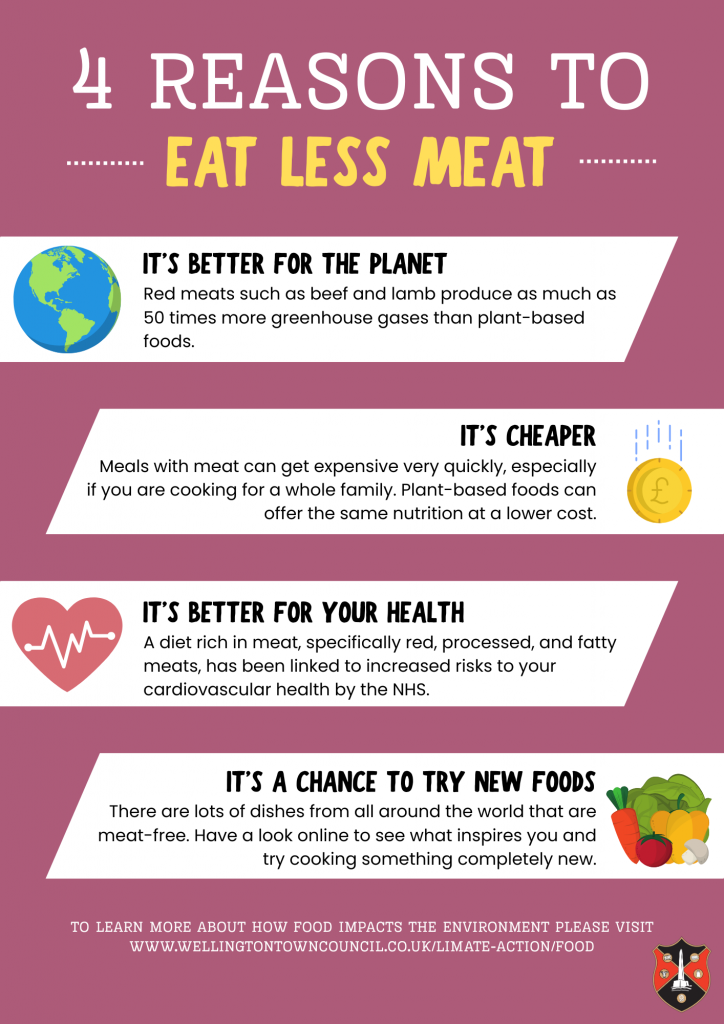
Sometimes easier said than done, eating healthier will benefit both you and the planet. While meat and dairy are both important sources of protein and nutrients, it is beneficial for you to explore eating more plant-based foods. The NHS recommends that you limit your consumption of red, processed, and fatty meats as they can contribute to health problems including raised cholesterol and high blood pressure.
Red meats such as beef and lamb produce as much as 50 times more greenhouse gases than plant-based goods. This amount is so high due to the microbes that live in the digestive systems of these animals that help them break down their food. These microbes produce methane which is then expelled by the animal and into our atmosphere.
A good way to cut down on your intake of red meat and processed foods is to aim to cook a vegetarian or vegan meal once or twice a week. You may find that you already have a few good vegetarian recipes in your repertoire! Reducing your meat intake by this small amount will help you explore different recipes and reduce your risk of heart disease, stroke, and diabetes.
Another type of food that can be harmful to yourself and the environment is ultra-processed foods. These foods contain many additives, preservatives, emulsifiers, and sweeteners to make them tasty and last longer. Ultra-processed foods include things like sweetened drinks, crisps, sweets, packaged cakes and biscuits, and some ready meals. These foods often contain high amounts of saturated fat, salt, and sugar alongside the artificial preservatives. Diets high in ultra-processed foods have been linked to increased risk of type 2 diabetes, obesity, and heart disease. The environmental impact of these ultra-processed foods is linked largely to their packaging which is often layers of plastics. As well as this, the production of a number of ingredients in these foods is directly harmful to the environment. Palm oil for instance, which is found in up to 50% of packaged goods in our supermarkets, is directly linked to deforestation and unsustainable agriculture practices.
There are lots of delicious and accessible vegetarian and vegan recipes out there that utilise fresh ingredients, many of which can be paired with our advice on local and seasonal produce to have a tasty meal that doesn’t negatively impact the environment or your health!